Cukroví: Why Czech Families Bake 12 Types of Christmas Cookies “Just to Keep It Simple”
If you spend December in the Czech Republic, you may wonder why every home suddenly transforms into a full-time artisanal bakery. Flour in the air. Vanilla everywhere. Mothers whispering ancient family recipes. And everyone pretending they’re not stressed at all.
Welcome to Czech Christmas cookies — cukroví. A tradition that is equal parts delicious, exhausting, and absolutely sacred.
What Exactly Is Cukroví?
Cukroví is a huge family of tiny, beautiful, handmade Christmas cookies. Not big cookies. Not soft cookies. These are miniature, bite-sized masterpieces that take hours (sometimes days) to make.
And here’s the kicker:
One type is never enough.
If you bake only two or three kinds, Czechs will politely say: Jé, letos to máte takové skromné, viď? (Oh… you’re keeping it simple this year, huh?)
But if you bake twelve? Perfectly normal.
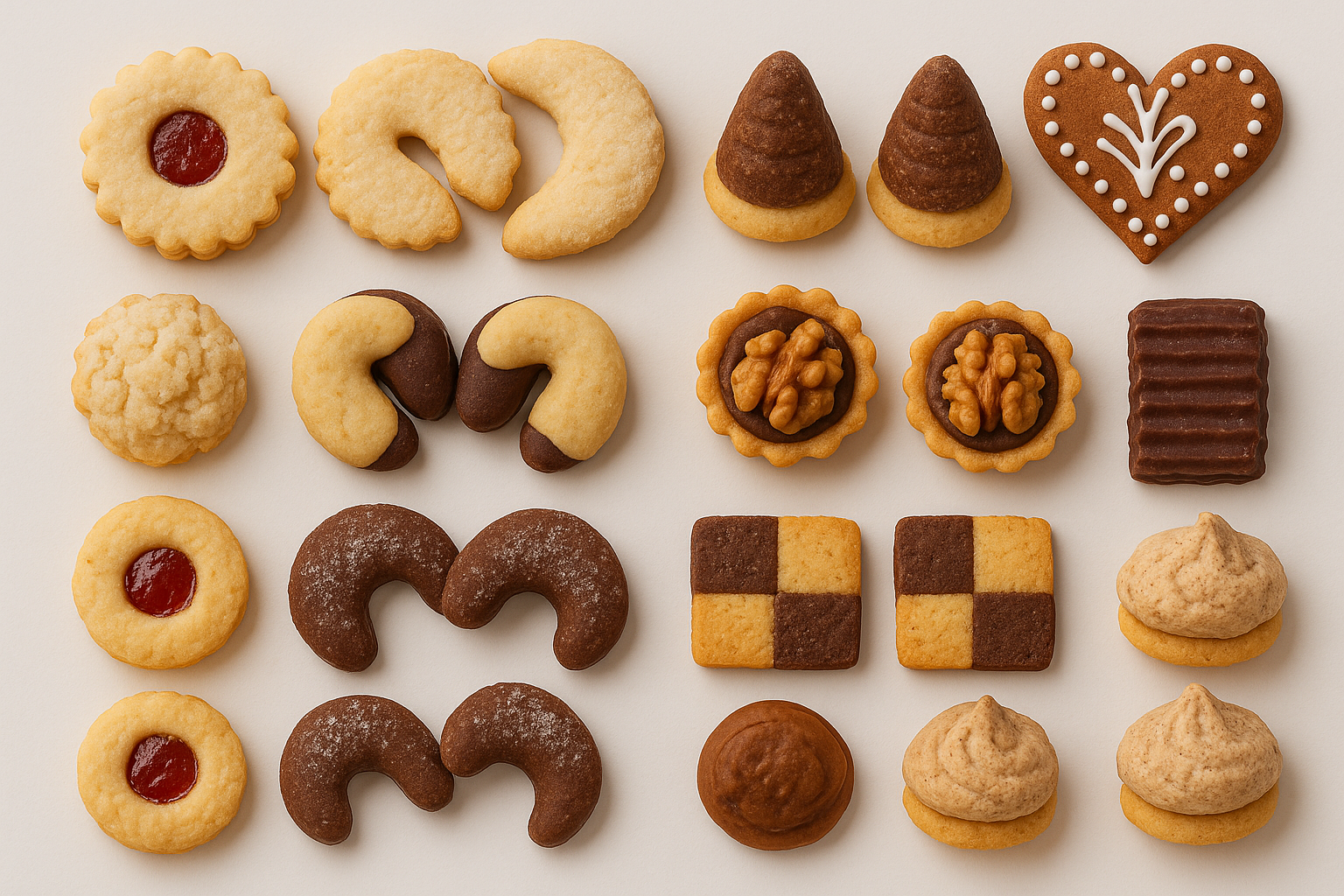
Less than 12 types of these is an ultimate Christmas failure.
When Does the Baking Start?
Officially: sometime in early December.
Realistically: right at the beginning of October, but no one admits it.
Why so early?
Because cukroví needs time to:
odležet — rest
basically age like fine wine
Fresh Christmas cookies? Ne, děkuji. Too soft. Too young. We need two-week-old cookies, please.
Types of Cukroví (A Survival Guide)
Here are the most iconic Czech cookies, in case you want to impress your Czech friends or confuse your international ones:
Linecké (Linzer Cookies)
Cute little sandwiches made of buttery dough and jam. Always star- or heart-shaped. Always eaten first.
Real-life quote:
Nesahej na linecké!
Don’t touch the linecké!
(Usually shouted at a child, but honestly applies to husbands too.)
Vanilkové rohlíčky (Vanilla Crescents)
Tiny moon-shaped cookies made of nuts and butter. Roll them in vanilla sugar while hot or face the consequences.
Warning: If they crumble while baking, someone will cry.
Vosí hnízda (Beehives / Wasp Nests)
No baking required. Just a mysterious mixture of rum, cocoa, and crushed cookies shaped into little beehives with creamy filling.
Foreigners always ask:
“Why is this shaped like a wasp nest?”
Czechs respond:
“Why not?”
Perníčky (Gingerbread Cookies)
Decorated with royal icing by someone with far too much patience.
Czechs insist:
„Musí být měkké!“
They must be soft.
But they are usually rock hard until February.
Why So Many Types?
Because tradice. Because babička expects it. Because co když přijde návštěva (what if guests come)? Because Czech moms treat Christmas baking like the Olympics.
Also because every Czech family has an emotional cookie ranking list:
Aunt Jana’s rohlíčky? 10/10
Sister’s vosí hnízda? Too much rum. 6/10
Babička’s linecké? Untouchable. Eternal. Holy.
Full-Time December Bakery Mode
During most of December:
Every kitchen countertop is covered in flour.
Every tin box in the house magically fills with cookies.
Every visitor must sample something.
Every Czech says:
Letos toho moc neděláme.
We’re not baking much this year.
(…as they pull out a box with 14 different kinds.)
And on Christmas Eve?
The cookies are finally allowed to be eaten. But slowly. Carefully. Respectfully.
The correct phrase is:
Dej si cukroví.
Have some cookies.
The real meaning is:
“Eat them, but not too many, because we need them to last until New Year’s.”
Real Czech Phrases in Action
Máme jen osm druhů, letos fakt nestíháme.
We have only eight kinds, we’re really not keeping up this year.Nejez to! Ještě to není odležené!
Don’t eat that! It hasn’t rested yet!Babička poslala další krabici cukroví.
Grandma sent another box of cookies.Kdo snědl rohlíčky?!
Who ate the vanilla crescents?!
Czech Christmas cookies are not just food. They are a cultural sport. A form of love. A holiday survival strategy. And a source of family drama since the 1800s. So if you find yourself in a Czech home in December and someone offers you cukroví, remember:
You are not just eating a cookie. You are experiencing Czech national identity in edible form.
