Imagine you're visiting Texas. You stop at a bakery. Behind the glass you spot a sign that proudly says: Czech Kolaches.
Your Czech heart skips a beat. Finally. A little taste of home. You order one. The baker hands you...
...a sausage wrapped in dough.
You blink. The baker smiles. You blink again.
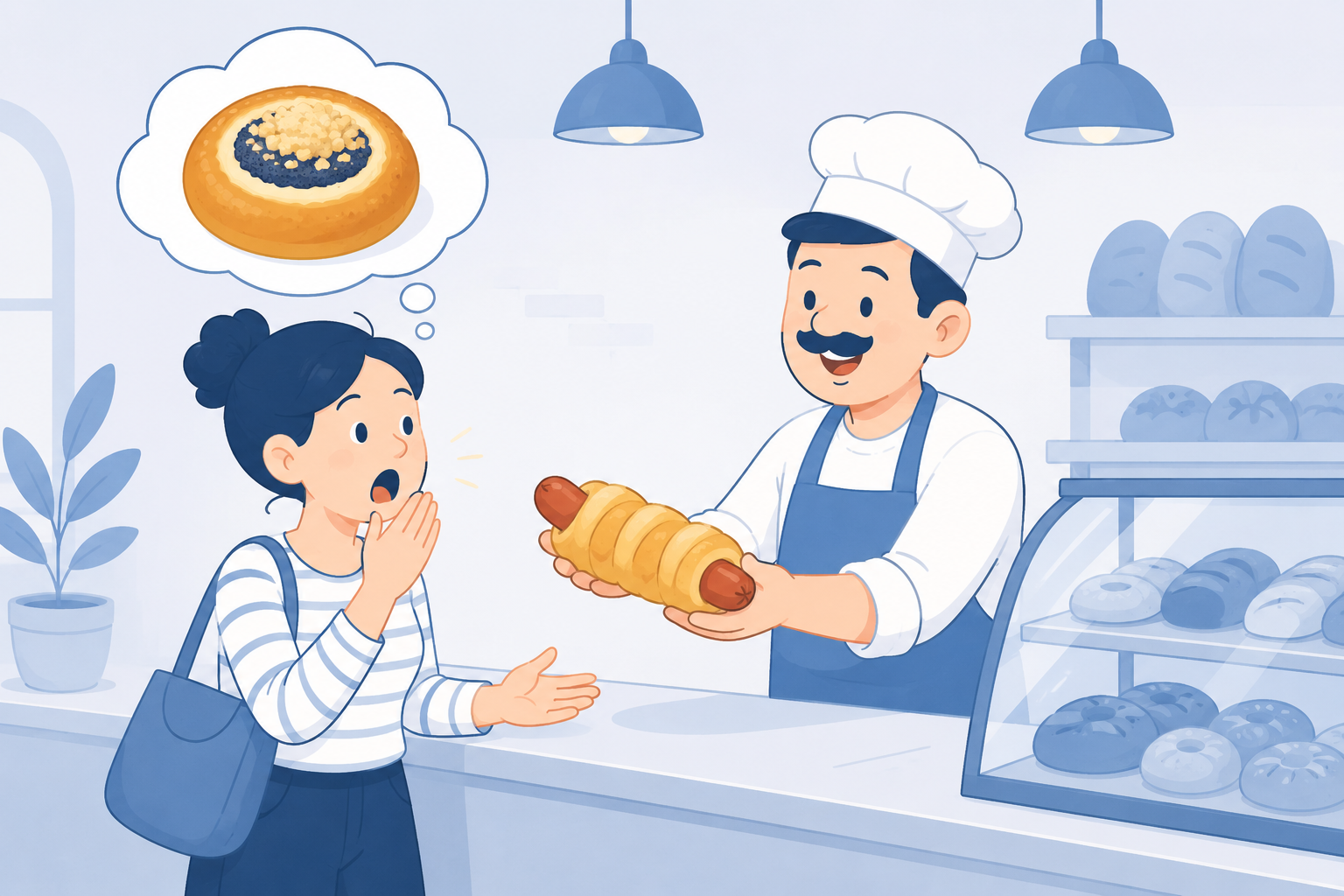
You asked for a koláč. You got... something that definitely has different life goals.
Somewhere in the distance, a Czech grandma drops her rolling pin. Welcome to one of the sweetest and strangest cases of culinary mistaken identity.
Wait... that's a kolache?
Well... Yes. And no.
If you ask someone in Texas what a kolache is, they'll probably point to a soft pastry filled with sausage, cheese, jalapeños, ham, bacon, eggs or just about anything that fits inside dough.
If you ask a Czech what koláč is... they'll probably wonder why you're trying to put a sausage into dessert. Because in Czechia, koláč has always been something completely different.
Meet the real koláč
A Czech koláč is a sweet yeast pastry. It usually has an open top (not a sealed pocket) and proudly displays its filling for the whole world to admire.
Classic toppings include:
maková náplň
"poppy seed filling"
tvaroh
"sweet farmer's cheese"
povidla
"plum butter"
jablečná náplň
"apple filling"
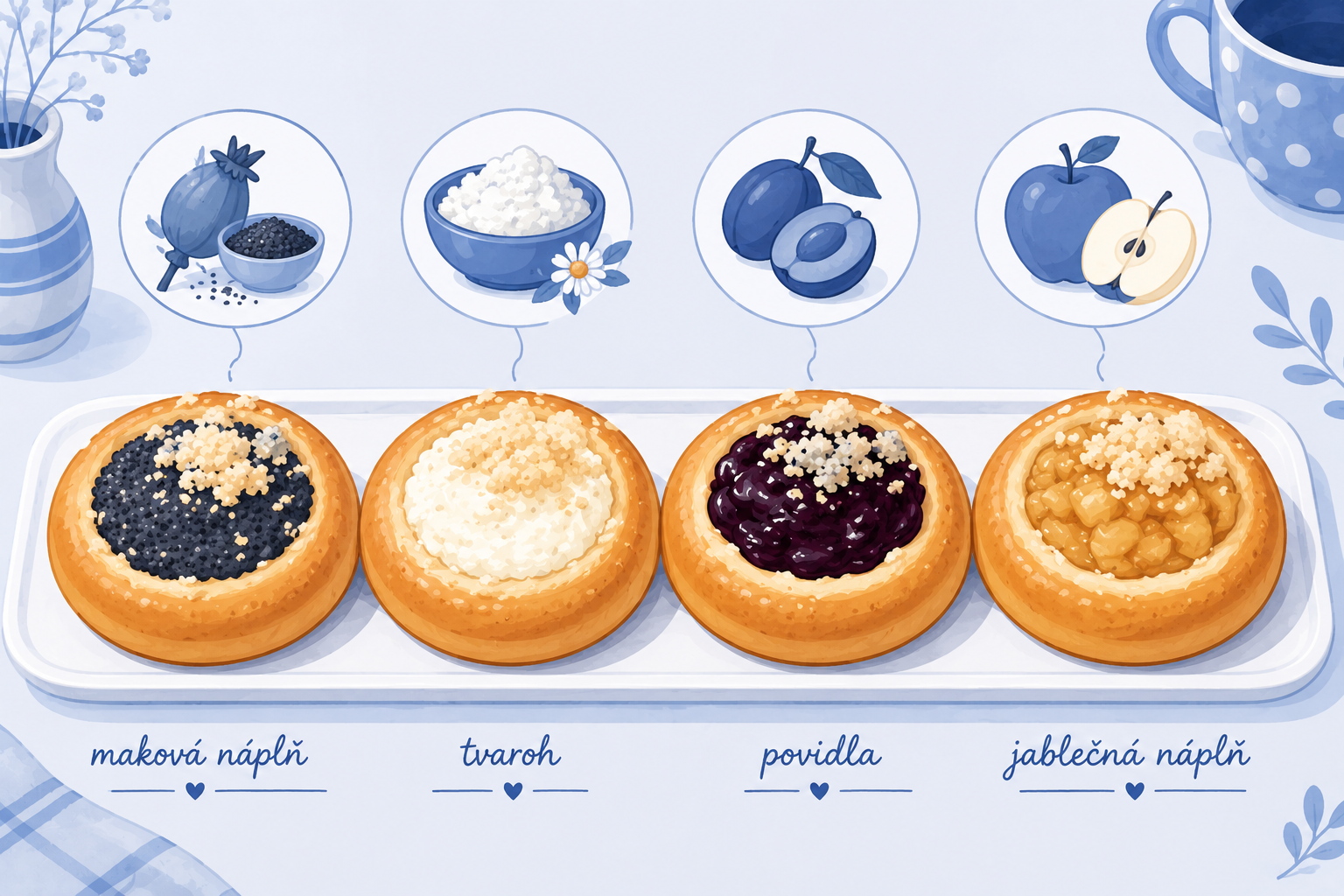
Sometimes all three appear on the same pastry. Because choosing just one would be unnecessarily difficult.
Tip: Find out where to have the best Czech koláč in Prague in this video from Kluci z Prahy.
The American kolache
Now let's travel back across the Atlantic. In the late 1800s, thousands of Czech immigrants settled in Texas. Naturally, they baked the foods they knew from home. Including koláče.
Over time, something interesting happened. The original sweet pastries remained. But local bakers also started experimenting. Eventually, sausages found their way into the dough. Cheese followed. Jalapeños joined the party. And before long... many Texans began calling these savory pastries kolaches.
Here's the funny part. Ask almost any Czech. They'll tell you: "That's not a koláč."
So what should it be called?
Many Czech-Americans will tell you that the sausage version is actually closer to klobásník. Yes. That's a real Czech word. A klobásník is a savory pastry wrapped around sausage. Much closer to what Texans lovingly call a kolache today.
Ironically, many Americans have never heard the word klobásník. Meanwhile, many Czechs have never heard someone call a sausage roll a koláč. Everybody is confused. Everybody is also eating delicious pastry. So perhaps everyone wins.
The wedding superstar
If you've ever been invited to a Czech wedding, you've probably met one of the country's greatest inventions: svatební koláčky.
Tiny. Soft. Dangerously addictive. Guests confidently say: "I'll just have one."
Twenty minutes later... they've accidentally eaten fourteen.
Nobody judges. Because everyone else has done exactly the same thing.
A visit to a Czech bakery
You walk into a small bakery. The shelves are overflowing with pastries. You smile confidently.
Dobrý den.
"Good morning."
Prosím jeden koláč.
"One koláč, please."
The baker asks:
S mákem, nebo s povidly?
"With poppy seeds or plum butter?"
You panic. Nobody told you there would be decisions.
The only correct answer is:
Jeden od každého.
"One of each."
This is known as responsible adulthood.
Cultural insight: Every family has "the best" recipe
Ask a Czech where to find the best koláče. You'll receive fifteen different answers. Ask a Czech grandma. She'll tell you hers are the best. She's probably right.
Koláče aren't just pastries. They're family traditions. Village festivals. Weekend baking. Sunday afternoons. Weddings. Harvest celebrations. Every bite tastes a little bit like childhood.
Can you make them at home?
Absolutely. Classic Czech koláč start with a rich yeast dough made from flour, milk, butter, eggs, sugar, and yeast.
Once the dough has risen, it's divided into small rounds, gently flattened in the middle, brushed with egg, and filled with your favourite topping.
Many recipes finish with drobenka which is a buttery crumble sprinkled generously over the top. Bake until golden. Eat while still warm. Wonder why anyone thought adding sausage was a better idea.
One last Czech lesson
The singular is:
koláč
The plural is:
koláče
The tiny wedding version?
koláček.
Which literally means "little koláč." Which also means you'll tell yourself you're only eating a little one. You won't.
Ready to order like a local?
Whether you're buying a koláč, a kobliha, or your morning coffee, knowing a few simple Czech phrases makes every bakery visit easier and a lot more fun.
If you'd like to order confidently in Czech cafés and bakeries, check out my Czech Coffee Shop Survival Vocabulary Sheet packed with real-life dialogues, natural expressions, and practical phrases you'll actually use.
Master Czech in the café – one cappuccino at a time!
This practical sheet is your survival guide to the Czech coffee shop jungle. Inside, you’ll discover:
Essential café vocabulary – from espresso to oat milk, learn how to order like a local.
Ready-to-use phrases – no grammar headaches, just sentences you can say right away.
Numbers made simple – understand why it’s dvě kávy but pět káv, with easy examples.
Cultural insights – what Czechs mean by pražská kavárna or kavárenský povaleč.
A real café dialogue – practice a short conversation with a barista.
Bonus: sample menu – so you know exactly what you’re ordering.
Perfect for beginners, this sheet combines culture, grammar, and real-life language so you can sit down in any Prague café with confidence.
