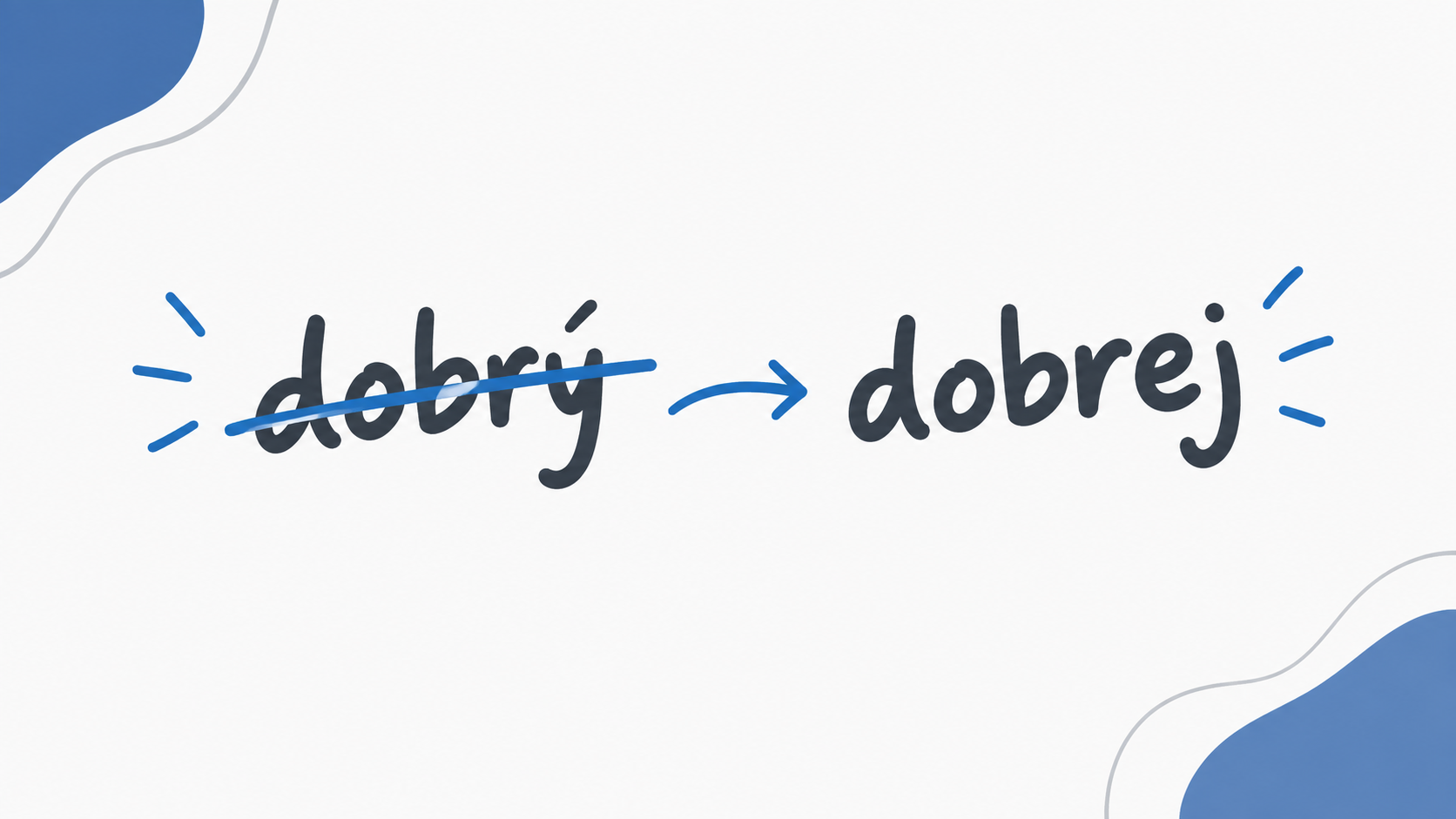
Why Czechs Say Dobrej and Dobrý: The Czech Colloquial Adjective Endings You’ll Hear Everywhere
Why do Czechs say dobrej instead of dobrý? Learn the most common colloquial adjective endings in spoken Czech and finally understand what you’re hearing in everyday conversations.
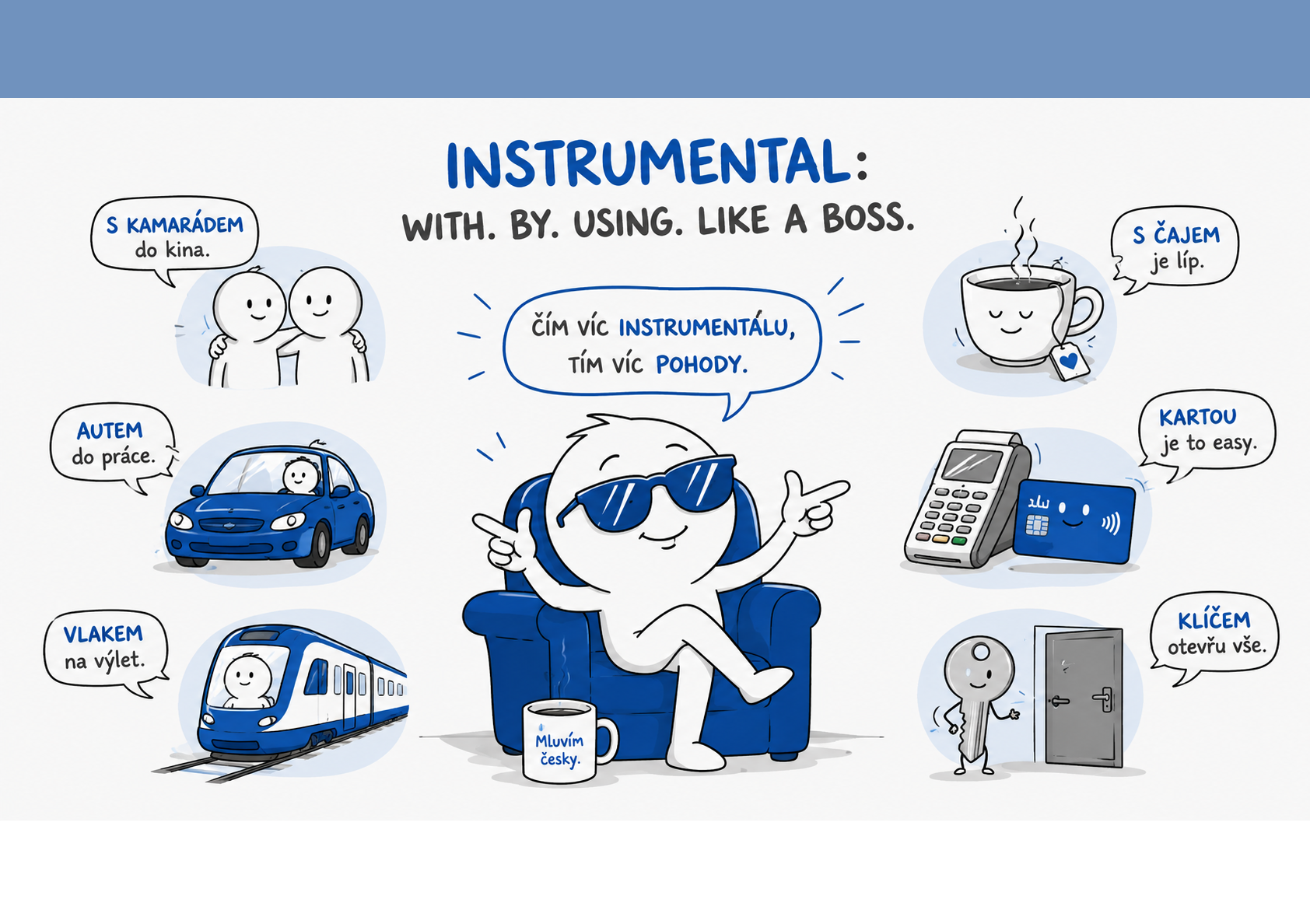
The Czech Case You Use Every Day Without Realising It: Instrumental
Learn the Czech Instrumental case through everyday phrases like s kamarádem, autem, vlakem, and kartou. Discover when to use it, how the endings work, and why you're probably already using it every day.
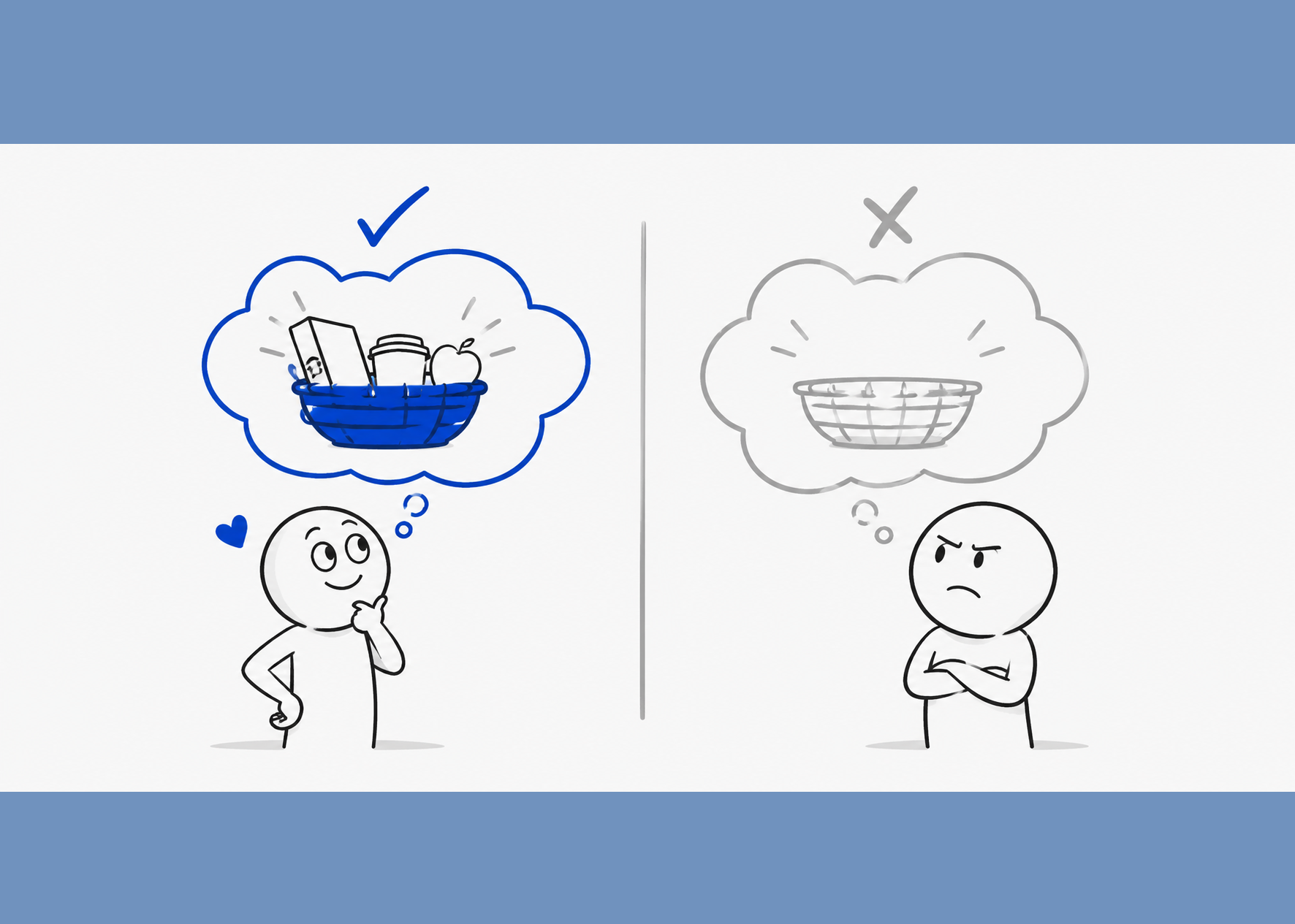
Nějaký vs. Žádný: Two Czech Words That Can Completely Change Your Sentence
Confused by nějaký vs. žádný? Learn the simple difference between "some/any" and "no/not any" in Czech, including why their endings change and how to use them naturally in real-life sentences.

Why Czech Restaurants Secretly Teach You the Accusative
Why do you order kávu but pivo? Discover how Czech restaurants can secretly teach you the Accusative case with practical examples you'll actually use when ordering food and drinks.
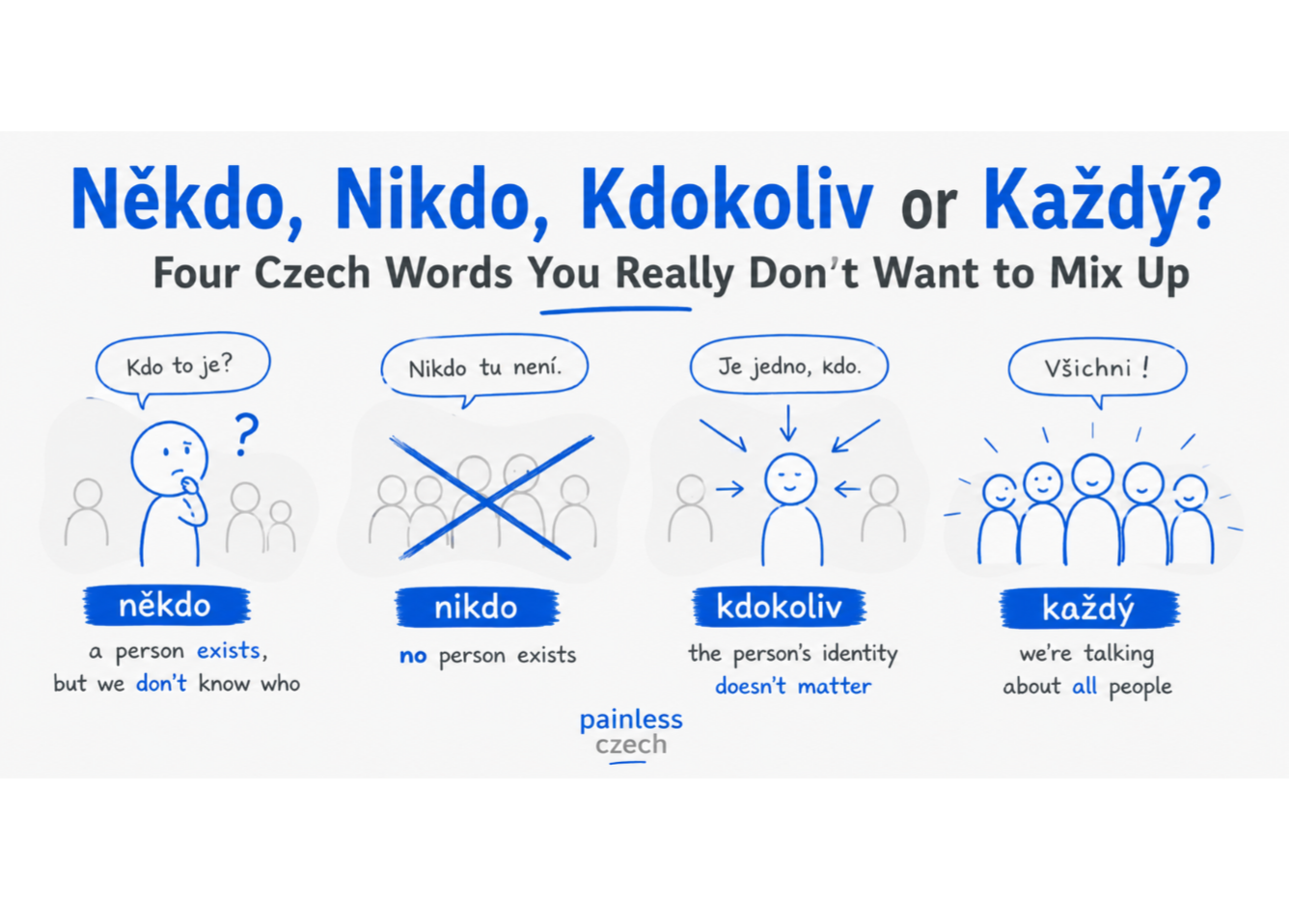
Někdo, Nikdo, Kdokoliv or Každý? Czech Words That Look Similar (But Aren't)
Někdo, nikdo, kdokoliv, každý… These Czech words look almost identical, but they can completely change the meaning of a sentence. Learn the simple difference between someone, nobody, anyone, and everyone with clear explanations and real-life Czech examples.
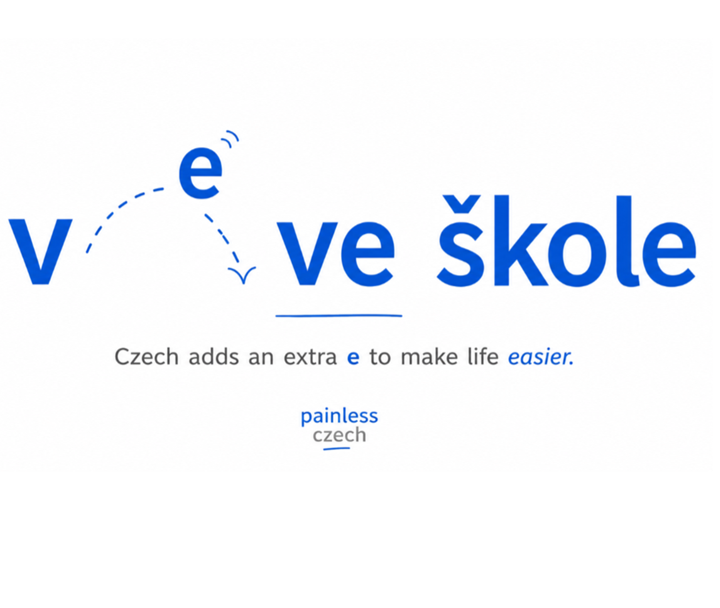
Why Do Czech Prepositions Suddenly Grow an Extra Letter?
Why does Czech sometimes say ke škole, ve škole, se mnou, or ze školy instead of k, v, s, and z? Discover the surprisingly simple reason behind these mysterious extra letters, learn the patterns with plenty of real-life examples, and start sounding much more natural in Czech.
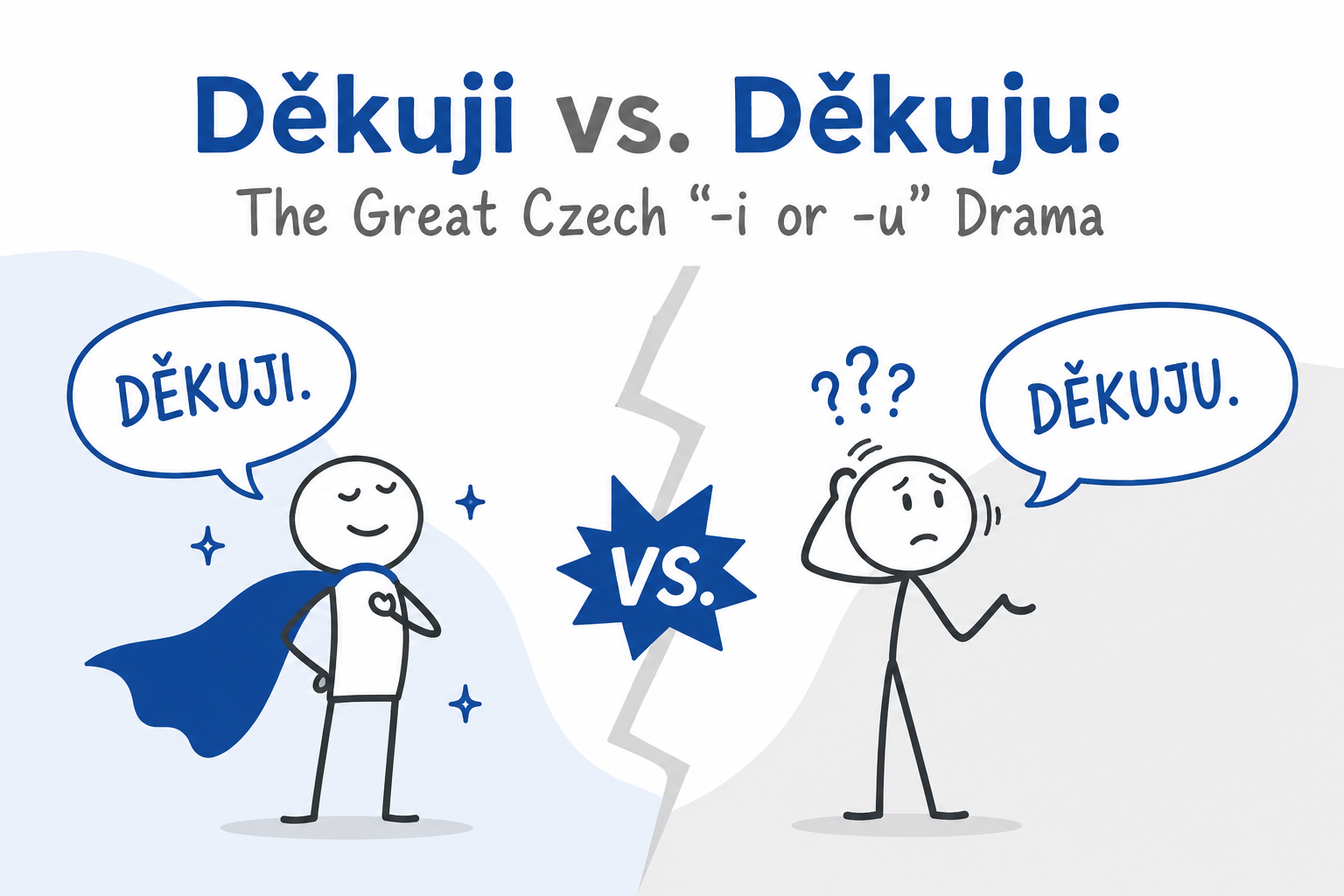
Děkuji vs. Děkuju: The Great Czech “-i or -u” Drama
If you’ve ever tried to thank someone in Czech and suddenly felt like you were choosing between two nearly identical doors in a confusing linguistic escape room, welcome to the děkuji vs. děkuju dilemma.
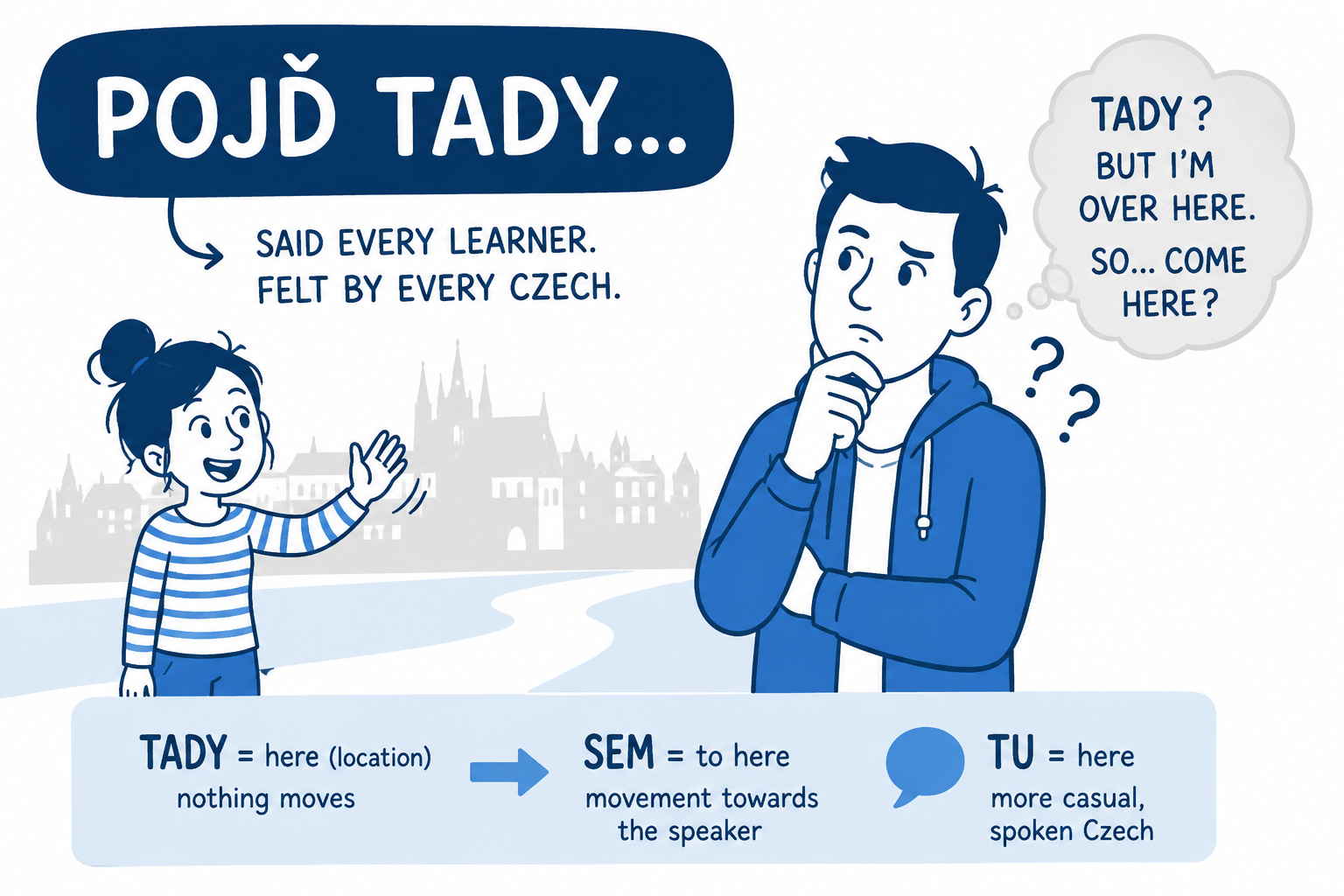
Tady × Sem × Tu: A Small Czech Hell You Will Eventually Walk Into
Three simple words, all meaning “here”… and yet each one slightly wrong in the wrong moment. This guide untangles tady, sem, and tu so you stop sounding almost right and start sounding naturally Czech.
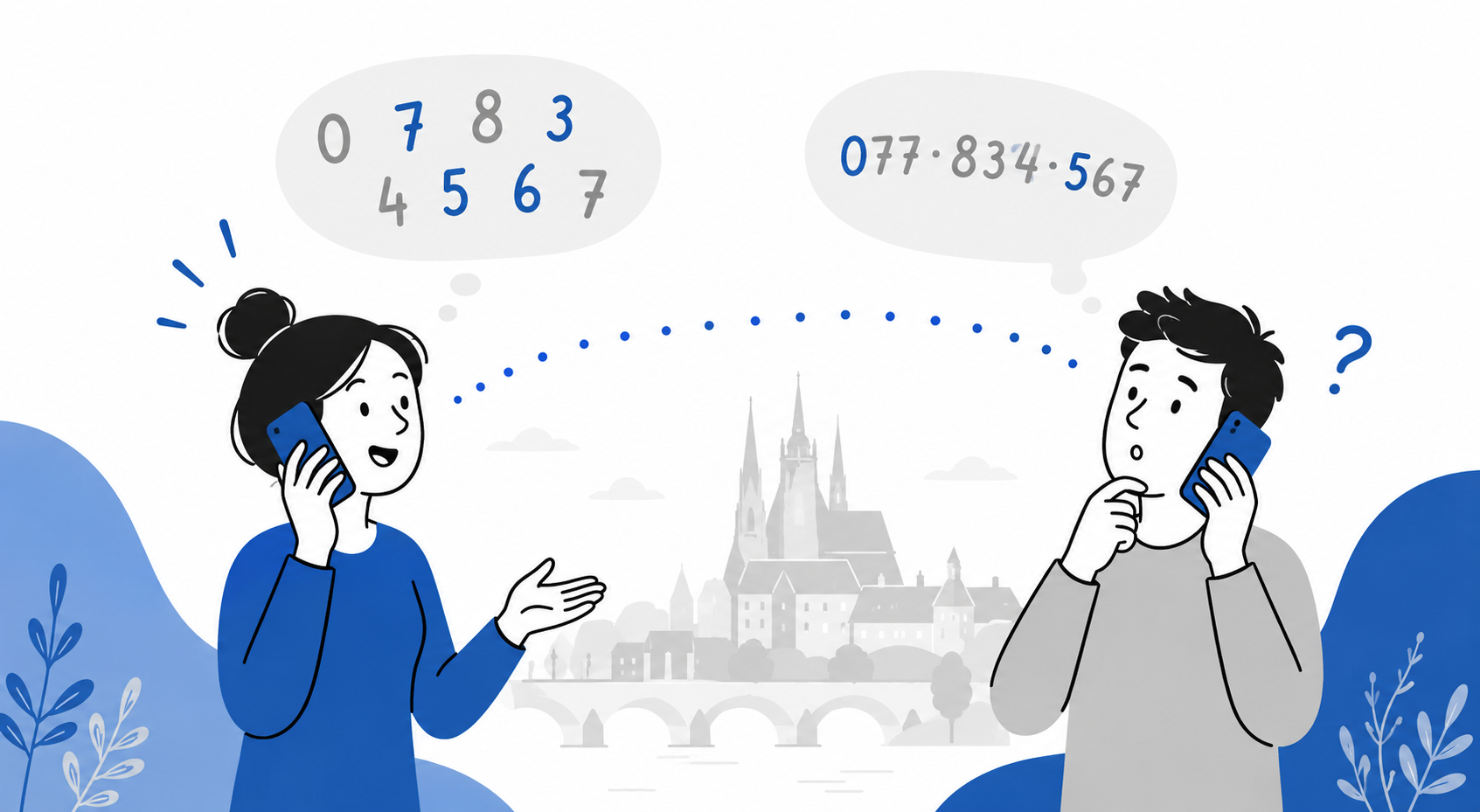
How to Dictate a Phone Number in Czech (Without Causing Mild Chaos)
Giving or understanding a phone number in Czech shouldn’t feel like decoding a secret agent message. You’ll learn how Czechs actually dictate numbers and how to ask for a number without awkward silence.
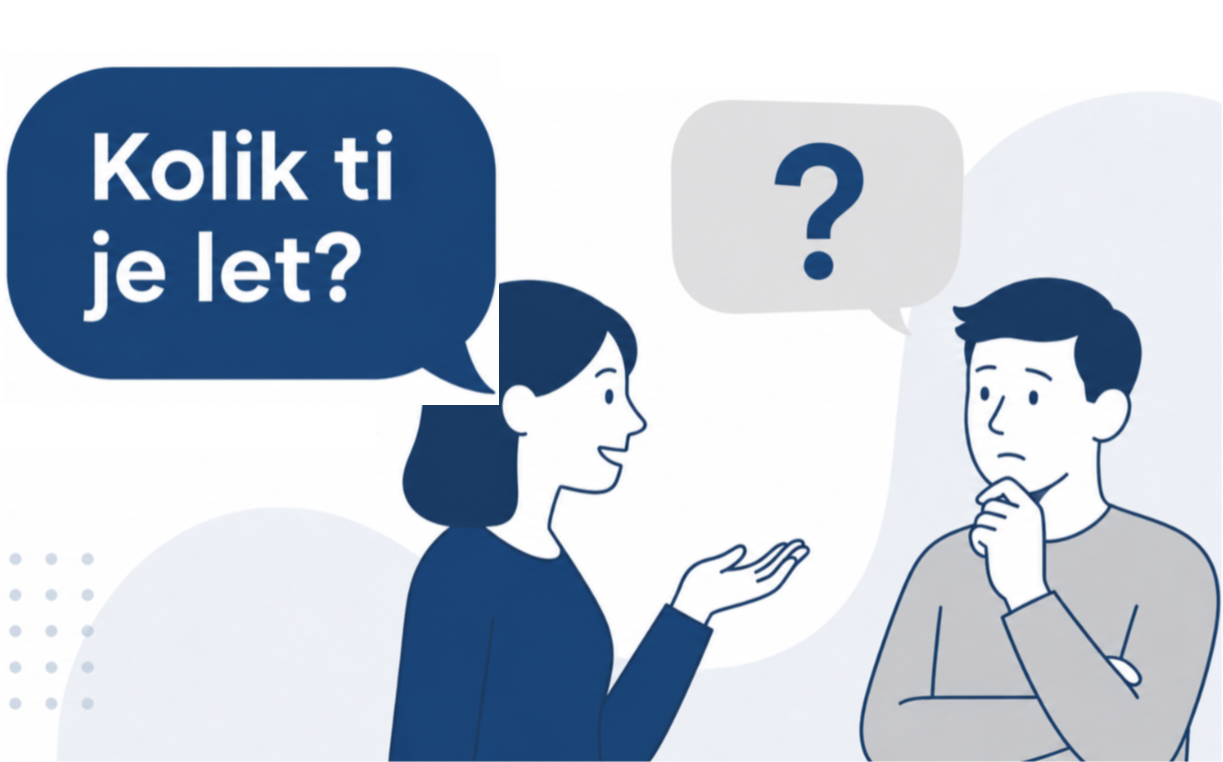
How to say your age in Czech (without sounding like a confused tourist)
One of the most common mistakes Czech learners make is saying Jsem 25 let or Mám 25 let when talking about their age. While these phrases make sense in English, they are incorrect in Czech. In reality, Czech uses a completely different structure: Je mi 25 let (literally “It is 25 years to me”).
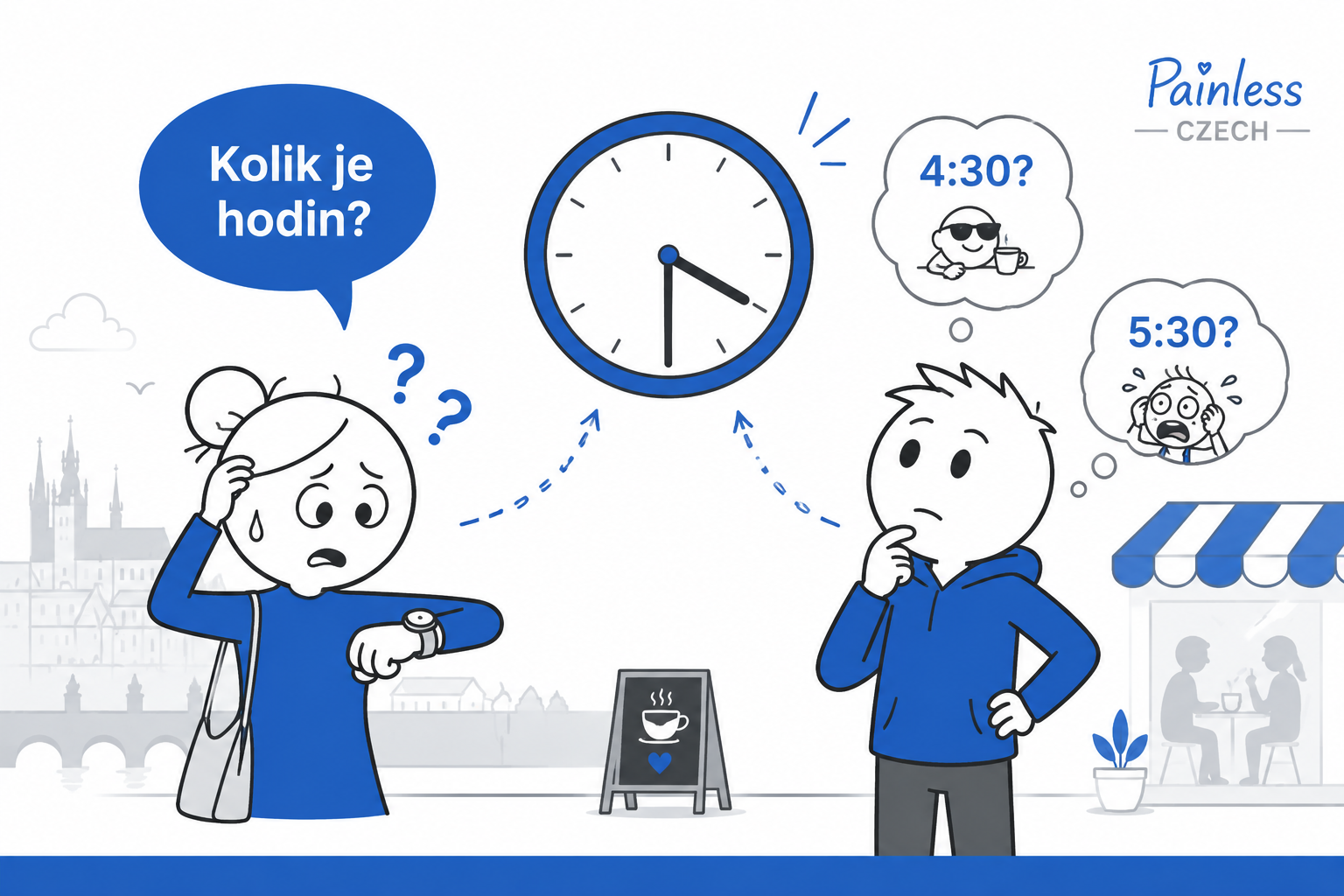
How to Tell Time in Czech (So You Don’t Show up an Hour Late and Ruin Your Life)
Why does půl páté mean 4:30 and not 5:30? This funny, practical guide explains how to tell time in Czech without confusion so you never miss a date or show up an hour late again.
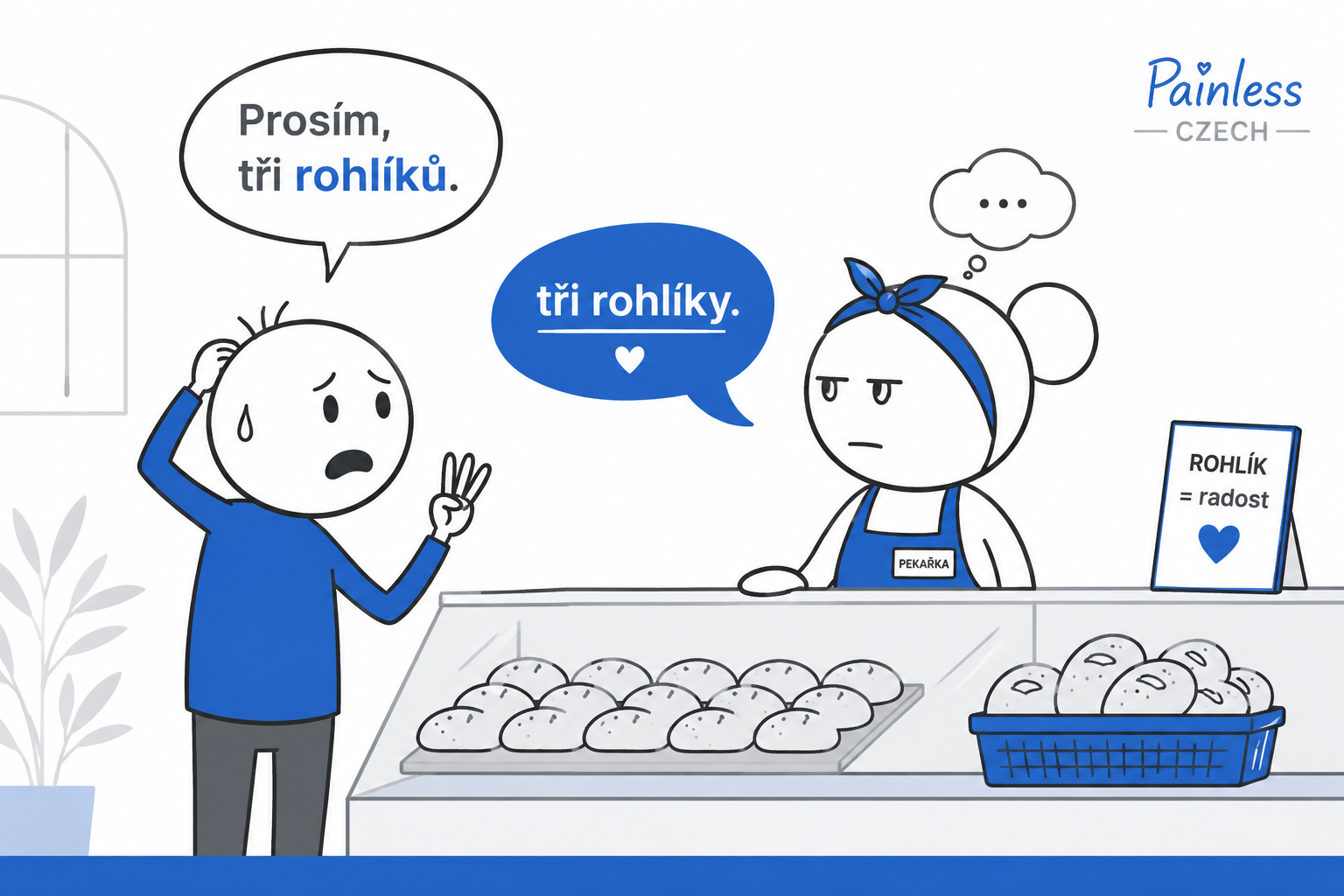
Czech numbers are messing with your nouns (here’s how to fix it)
Why do Czech learners say tři rohlíků when it should be tři rohlíky? This simple rule explains how Czech numbers change nouns with real-life examples from bakeries, cafés, and everyday situations.
DĚLAT: The Czech Verb That Does Everything
The Czech verb dělat is one of the most common verbs you’ll hear every day. Learn how it works, when to use it, and how it replaces both “do” and “make” in real Czech conversations.
The 10 Czech Verbs You Can’t Survive Without
Learn the 10 most used Czech verbs that appear in almost every conversation. Master these basics and start speaking Czech more naturally right away.
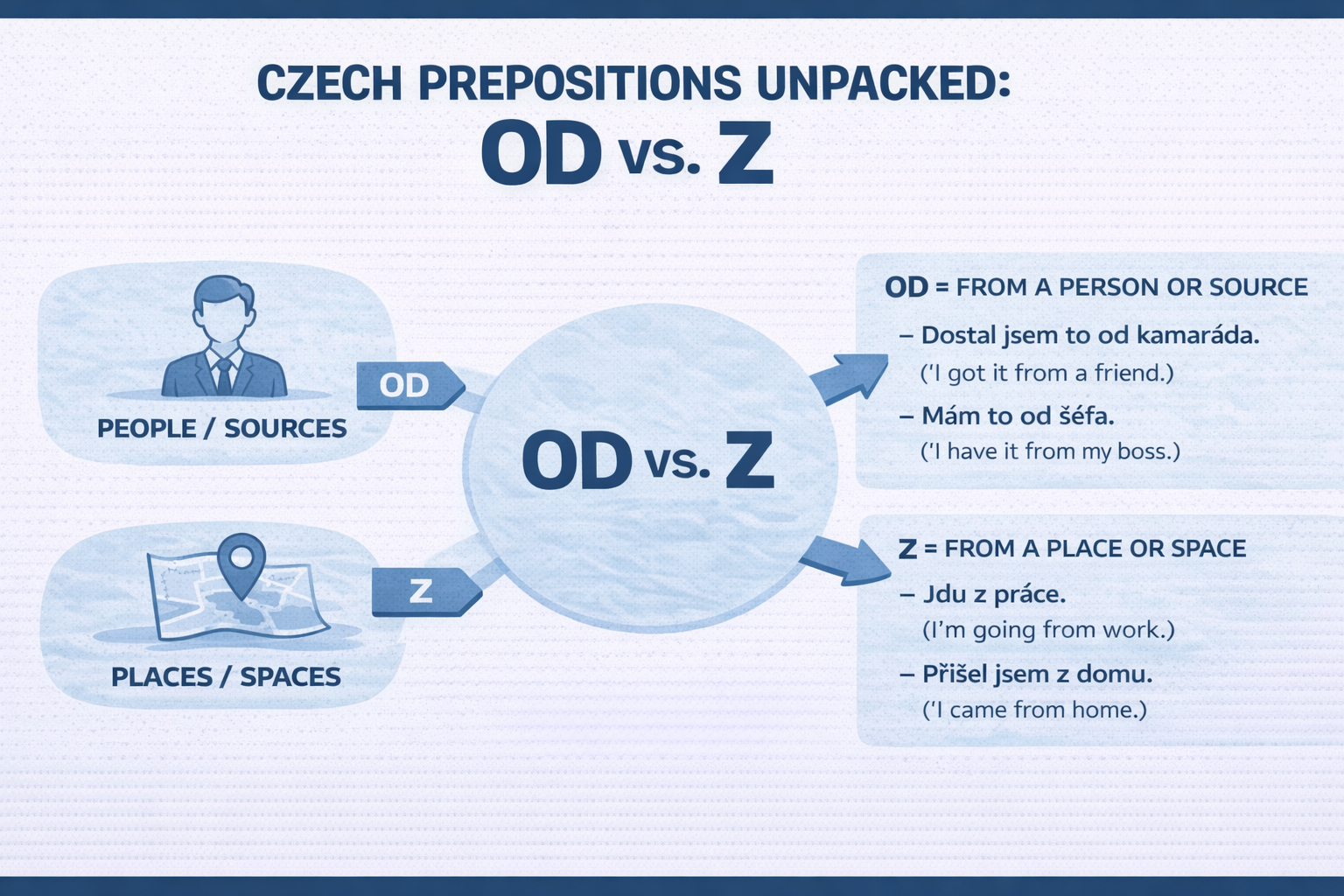
Czech Prepositions Unpacked: OD vs. Z
Both od and z mean “from” in Czech but use the wrong one, and your sentence can sound anywhere from slightly off to deeply disturbing. This guide shows you the real difference (person vs. place), the most common mistakes, and the patterns you actually need to remember to get it right every time.
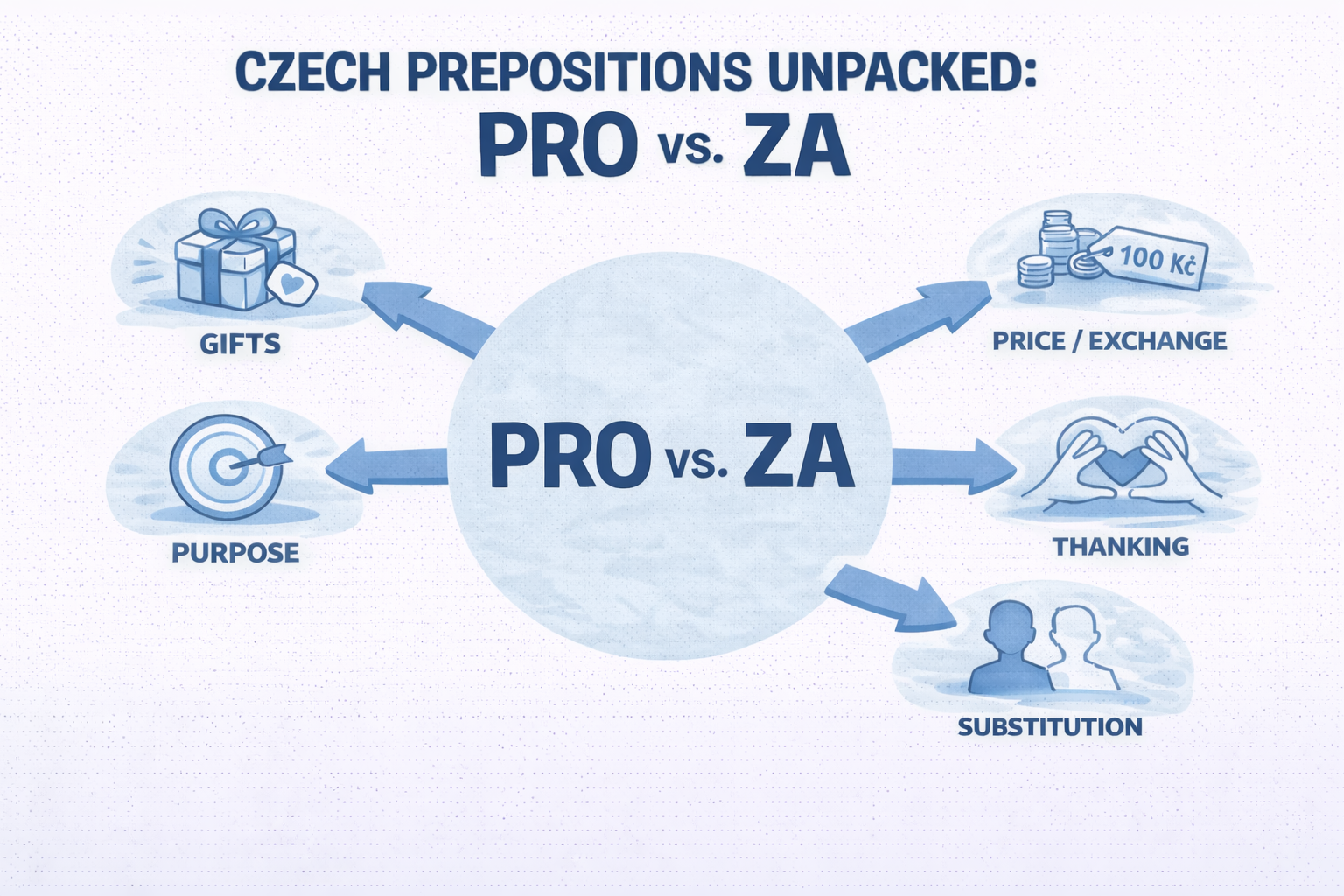
Czech Prepositions Unpacked: PRO vs. ZA
Two tiny Czech prepositions, one massive problem. Both pro and za translate as “for” in English but use the wrong one, and suddenly your innocent sentence sounds very weird. This guide breaks it down with clear rules, real-life examples, and just enough humor to make sure you never say děkuji pro pomoc again.
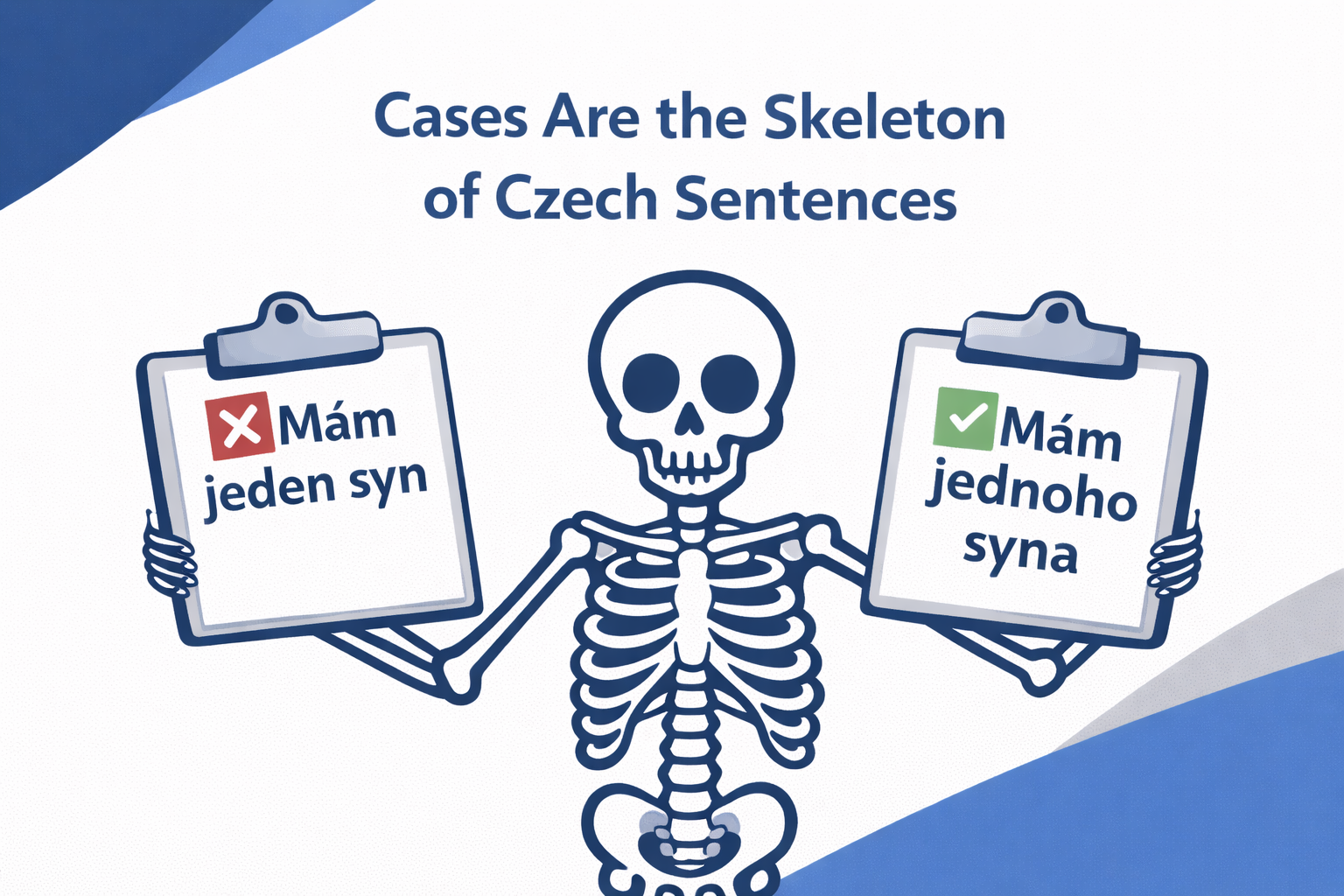
Czech Cases: The Thing You Tried to Ignore (But They Didn’t Ignore You)
Czech cases aren’t optional and ignoring them breaks your sentences. Learn why endings matter and how one small change can completely transform your Czech.
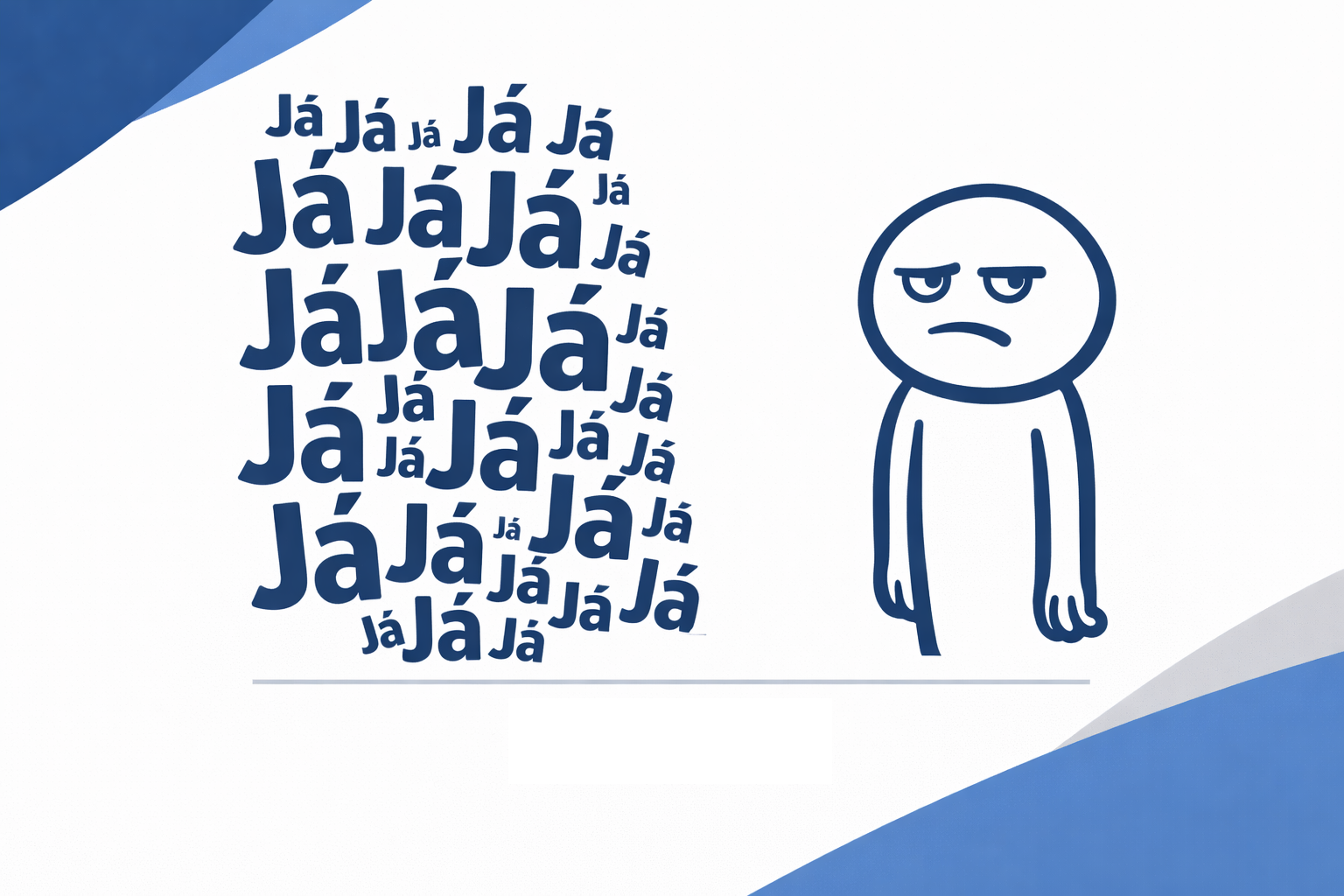
Stop Saying “Já” All the Time: Why Czech Isn’t About You
Why saying já in every Czech sentence makes you sound unnatural and how dropping pronouns instantly makes your Czech smoother, cleaner, and more native-like.
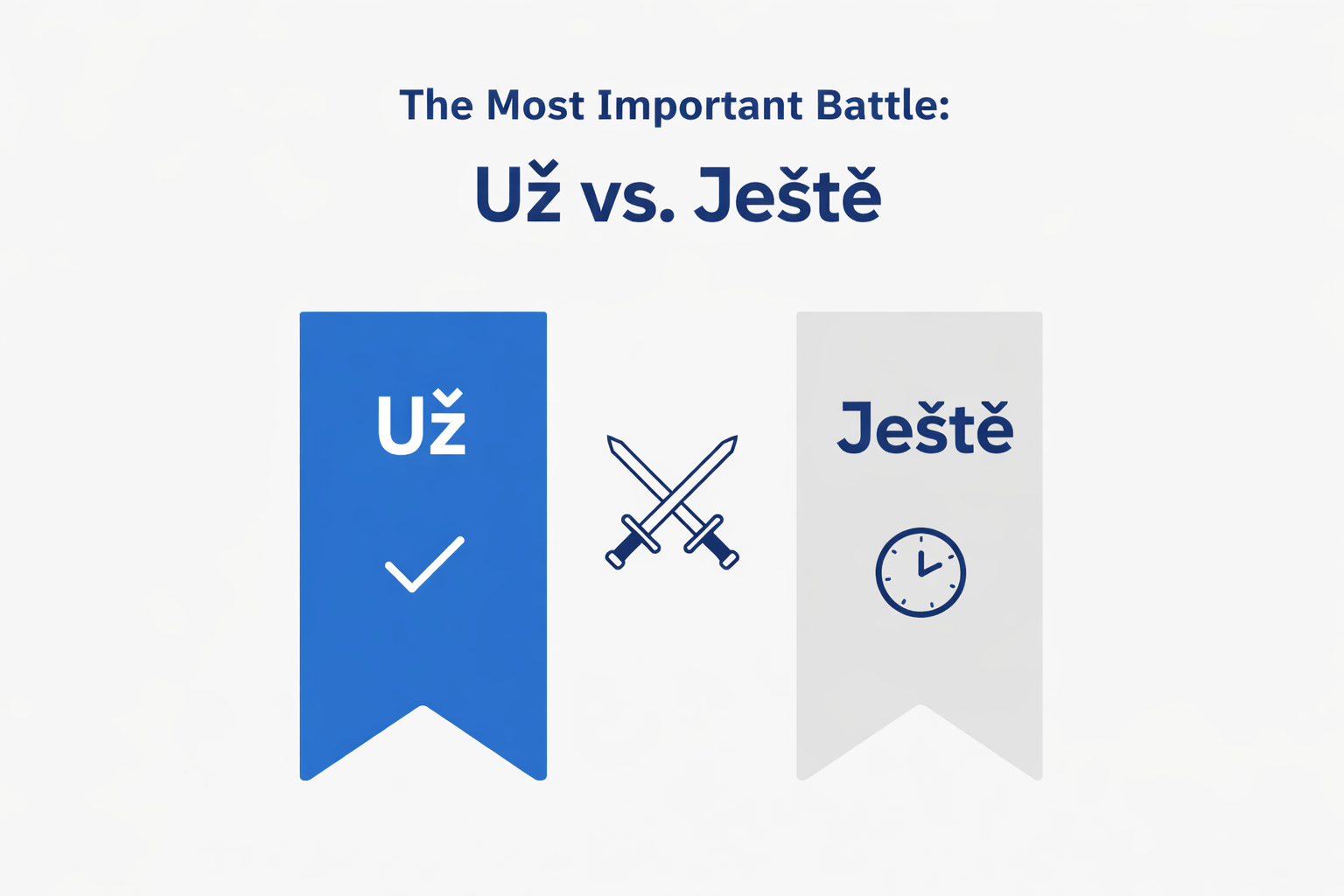
Už vs. Ještě: The Tiny Czech Words That Control Time (and Your Sanity)
A tiny pair of words, a huge difference in meaning. Learn how už and ještě shape time in Czech, why one means “already” and the other “still/not yet,” and how to stop accidentally saying the opposite of what you mean.
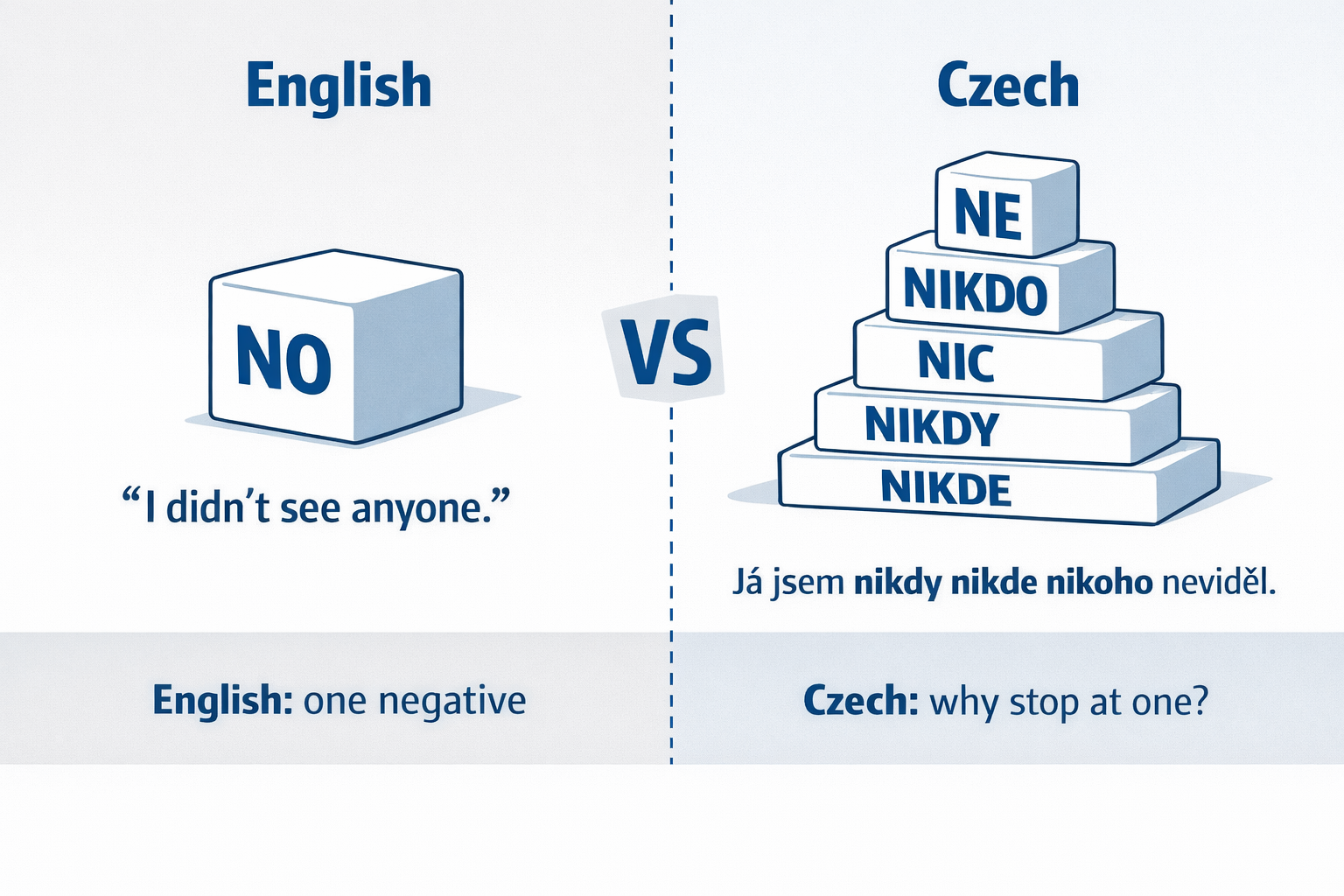
Czech Negation: Why One “No” Is Never Enough
Czech negation breaks one of the biggest rules of English grammar. While English allows only one negative in a sentence, Czech happily stacks them together. In this guide, you’ll learn how Czech negation works, why learners often get it wrong, and how sentences like Já jsem nikdy nikde nikoho neviděl can be perfectly correct.