Děkuji vs. Děkuju: The Great Czech “-i or -u” Drama
If you’ve ever learned how to say thank you in Czech and thought, “Great, I’ve got this,” Czech quietly leaned in and said: not so fast. Because suddenly you’re staring at děkujiand děkuju, wondering if you’ve just discovered two different levels of politeness… or accidentally joined a linguistic reality show.
So… Is There Any Difference?
Let’s clear this up right away. Both děkuji and děkuju mean exactly the same thing: "thank you." No difference in meaning, no hidden emotional baggage. The only thing that changes is how you sound.
The Tone: Formal vs. Human
Děkuji is the more formal, neutral version. It’s what you use when you want to sound polite, composed, and like someone who probably replies to emails on time. For example, děkuji za váš čas means "thank you for your time," and fits perfectly in professional or polite situations.
Děkuju, on the other hand, is what happens when you relax. Same gratitude, but now in sneakers. You’ll hear it everywhere in daily life: děkuju moc "thanks a lot." It’s warm, natural, and very common in spoken Czech.
But This Is Bigger Than “Thank You”
Here’s the important twist: this is not just about saying thank you. This is your first encounter with a broader Czech pattern, the mysterious -i vs. -u ending in the “I” form of some verbs.
Czech verbs sometimes give you two options in the first person singular, and they behave a bit like your wardrobe:
the -i form is the “formal outfit”
the -u form is the “casual outfit”
Other Verbs That Do This
This is not random. And more importantly, it’s not about all verbs. This pattern appears with verbs ending in -ovat (like pracovat, studovat, kupovat, potřebovat).
In standard Czech, these verbs form the 1st person singular like this:
pracuji
studuji
kupuji
potřebuji
But in spoken Czech, these forms are very often simplified:
pracuju
studuju
kupuju
potřebuju
So the real shift is:-uji → -uju
Example:
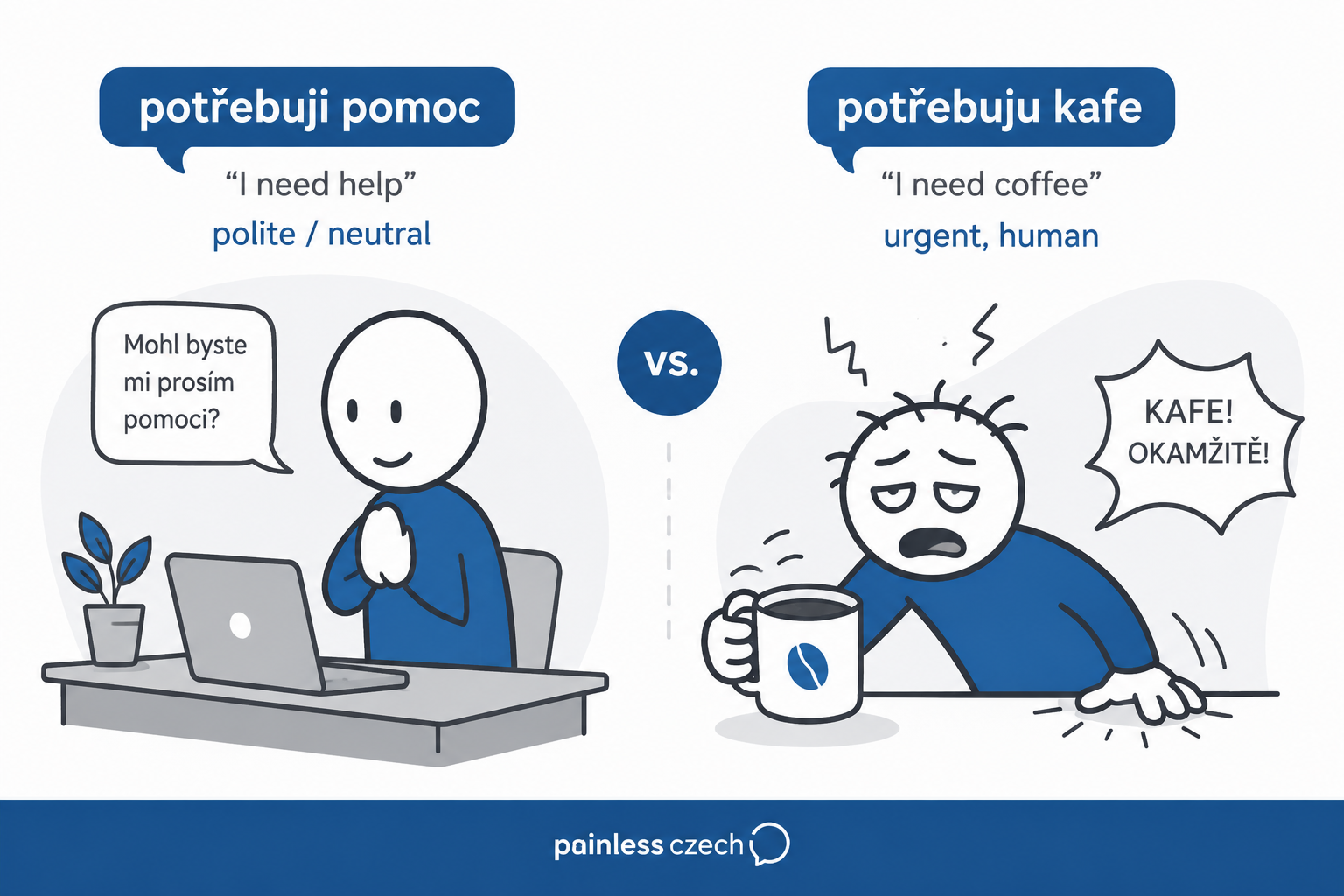
potřebuji → potřebuju — "I need"
potřebuji pomoc — "I need help" (polite / neutral)
potřebuju kafe — "I need coffee" (urgent, human)
So What’s Going on?
Historically, Czech developed parallel endings, and over time the -u forms became dominant in spoken language. The -i forms stayed alive in formal, written, or slightly more careful speech. So now both exist, and native speakers switch between them without even thinking about it while learners stare into the distance.
What Should You Do as a Learner?
A few useful takeaways that won’t betray you in real life:
Not every verb allows this change. You have to learn it case by case.
The -i forms are always safe, correct, and polite.
The -u forms make you sound more natural in everyday conversation.
In spoken Czech, you will hear -u forms a lot more often.
The Only Rule You Really Need
So how do you actually use this without overthinking it every time you open your mouth? Start simple. Use děkuji in formal situations and děkuju everywhere else. Then gradually notice other verbs where this pattern appears and copy what native speakers do.
Because in the end, Czech isn’t testing your grammar. It’s testing whether you can sound natural without overthinking every ending.
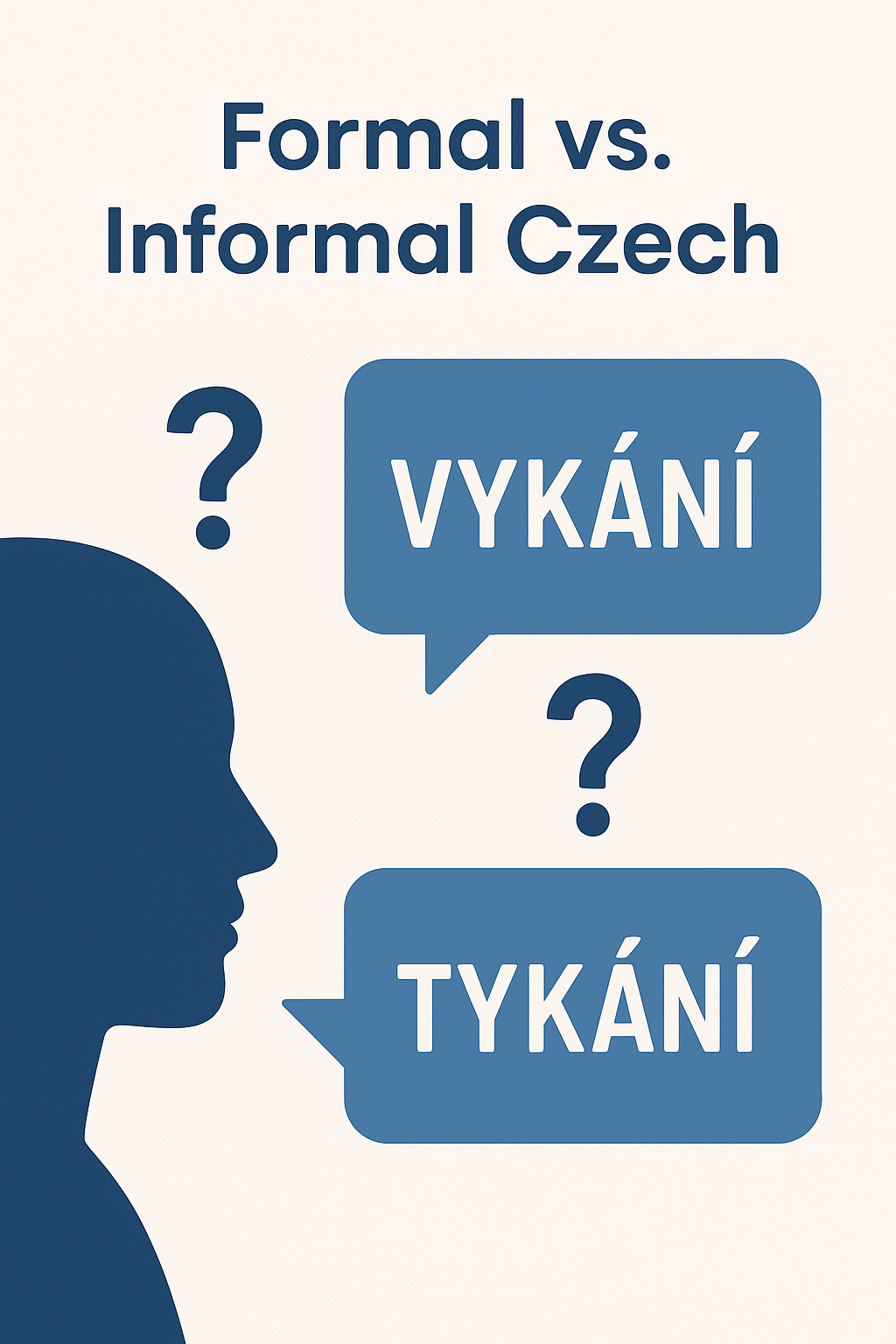
Ever wondered why your textbook Czech doesn’t always match what you hear on the streets of Prague? This handy sheet reveals the juicy secrets of how Czechs really speak. You’ll learn when to play it cool with friendly “tykání” (informal you) and when to keep it classy with “vykání” (formal you). Plus, you’ll spot those cheeky shortened verb forms and everyday slang that makes you sound like you truly belong. Think of it as your shortcut to speaking Czech like a local — confident and natural.
