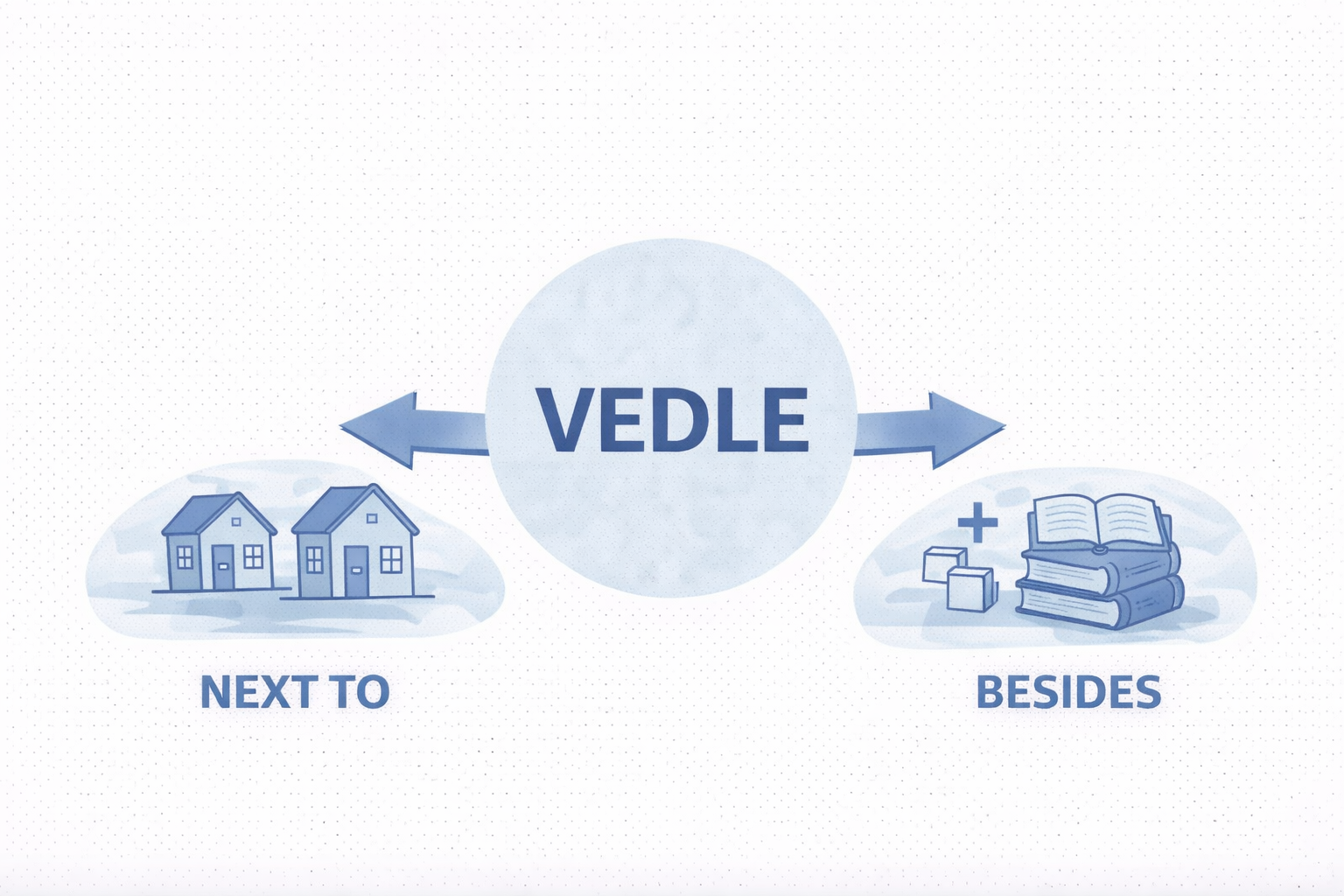
Czech Prepositions Unpacked: VEDLE
The Czech preposition vedle expresses being directly next to something and is used for precise physical proximity. This article explains how vedle works with the genitive case, how it differs from u, and how it can also mean “besides” in more abstract contexts.

Czech Prepositions Unpacked: U
The Czech preposition u expresses proximity being near a place or at someone’s place, without being inside. This article explains how u works with the genitive case, how it differs from v and k, and how to use it correctly with places and people.
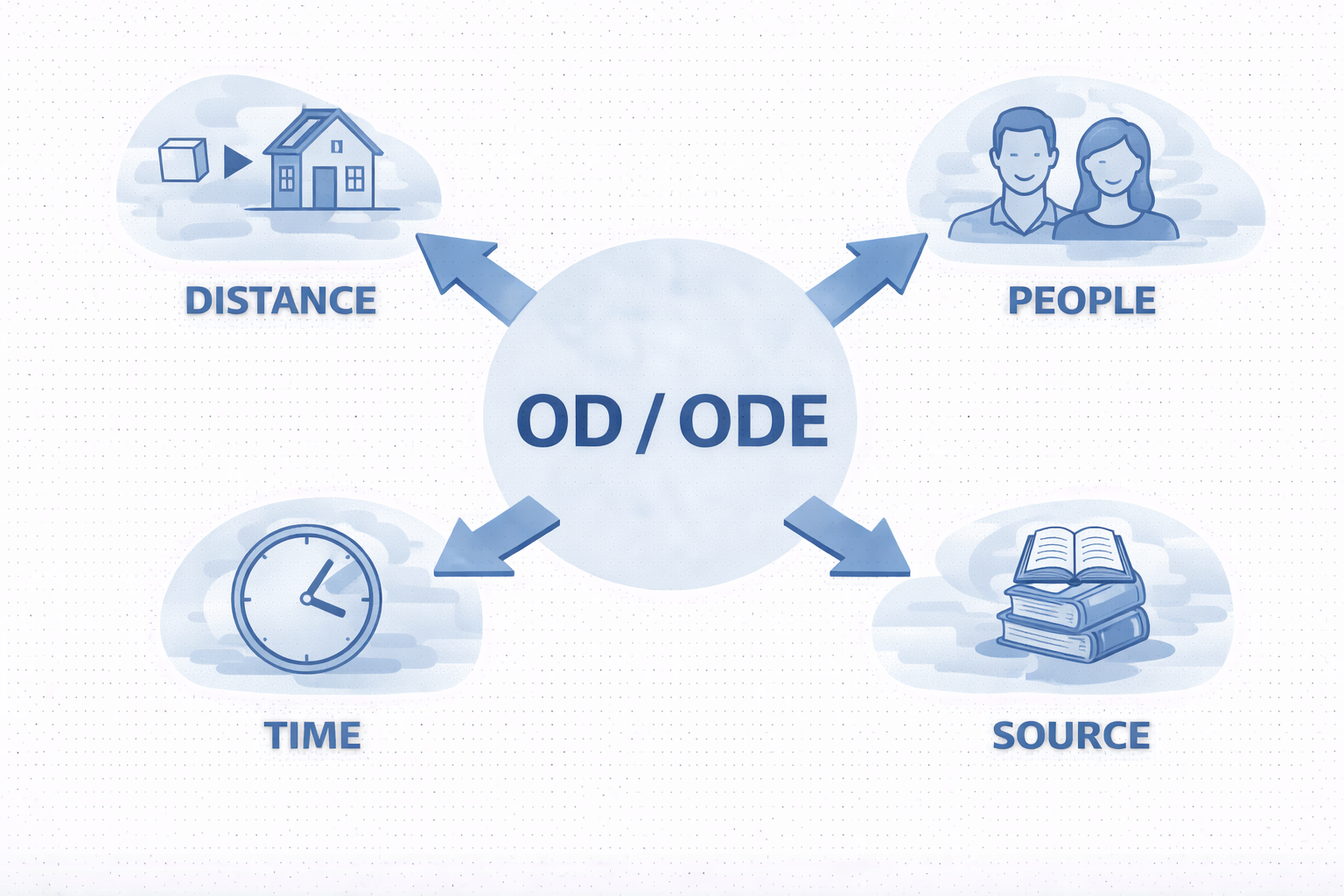
Czech Prepositions Unpacked: OD / ODE
The Czech preposition od / ode expresses starting points, distance, and origin especially when referring to people or time. This article explains how od differs from z, when to use ode for pronunciation, and how to use the genitive correctly with clear examples.
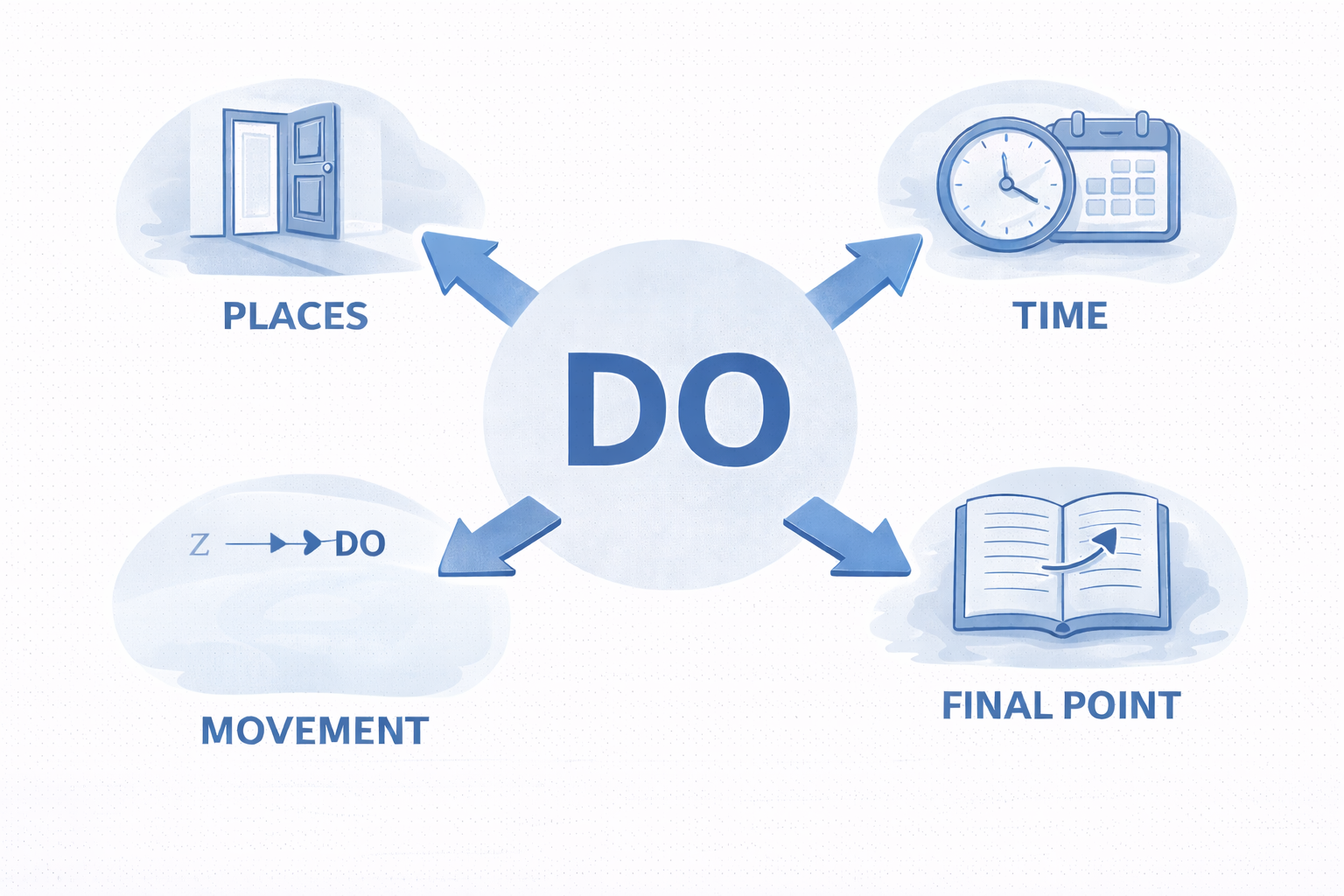
Czech Prepositions Unpacked: DO
The Czech preposition do is all about movement inside and clear endpoints. This article explains how do works with the genitive, when to use it for places and time, and how to avoid the most common mistakes with na with clear rules and practical examples.

Let’s Talk About the Genitive Case (aka the Moody One)
The Genitive might sound scary at first, but it’s actually your everyday case for expressing possession, quantity, and negation. In this post, you’ll finally understand why Czechs say “bez cukru” and “hodně studentů,” and how to use Genitive forms with ease — with tips, tables, and fun examples!